Agentistan
a world that runs itself, and history’s wars commanded in plain words
The problem
People hear that AI can take instructions in plain words and get on with the work, but rarely see it do that reliably, inside hard rules, without making things up.
Outcome
Live and free to play
Stack
- Groq
- Cloudflare Workers
- Durable Objects
- SQLite
- WebSockets
- n8n
- Solidity
- viem
- Base Sepolia
- Workers AI
What I built
Two games on one Cloudflare Worker, all on free tiers.
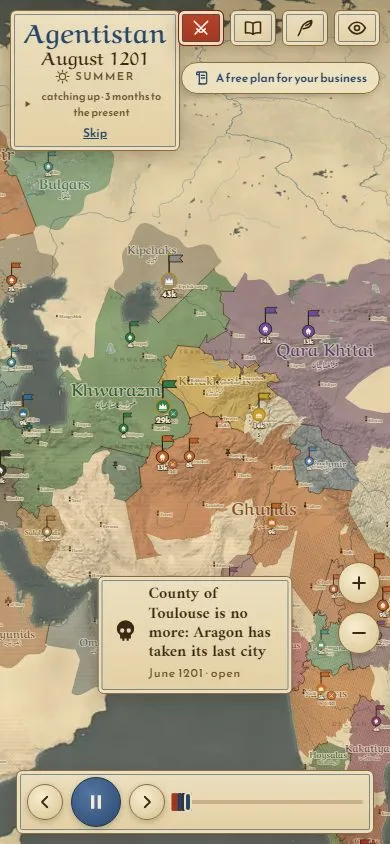
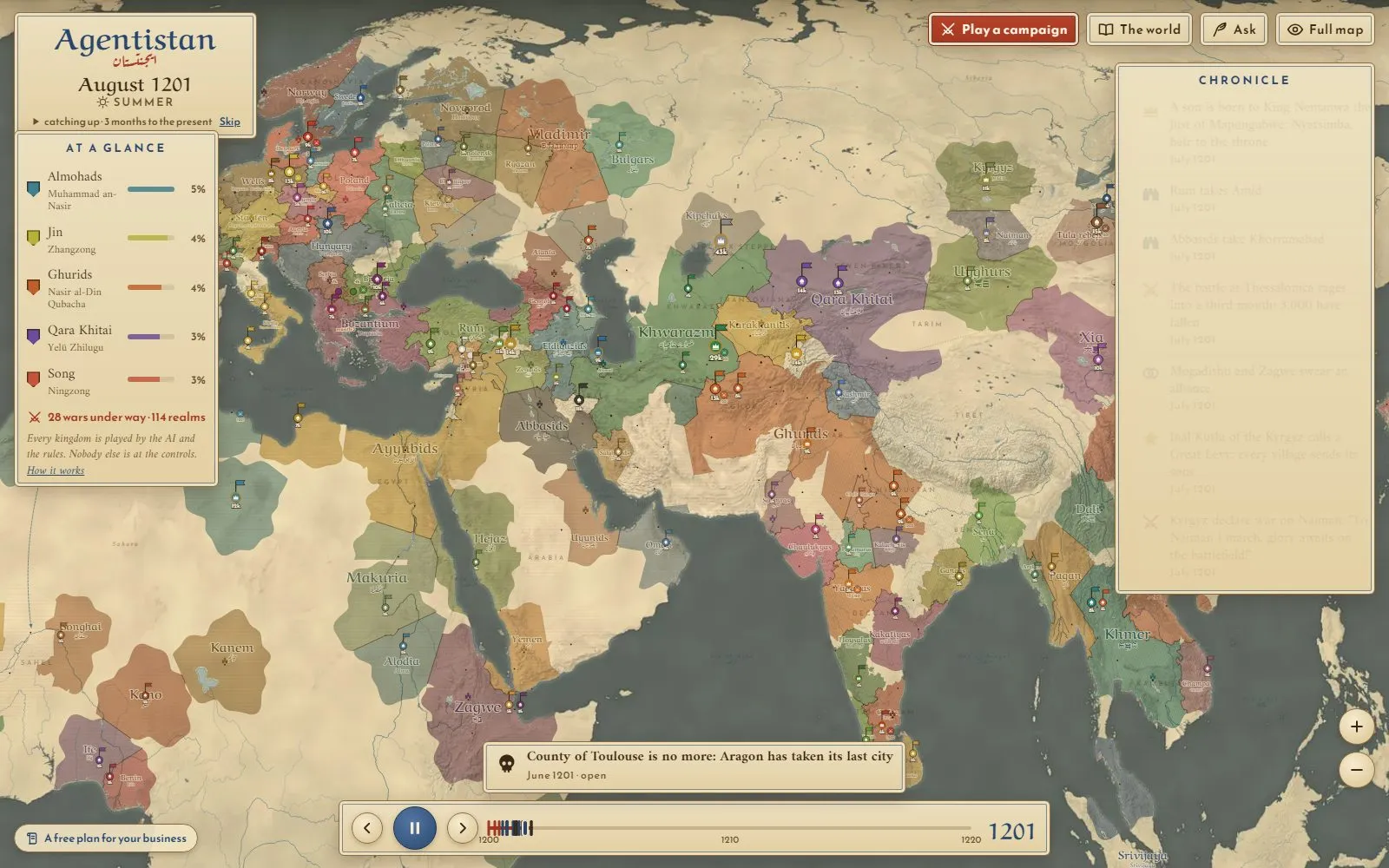
Watch is the Old World of the year 1200: 117 real realms and their rulers, from Castile to the Song, played entirely by AI. A month passes every two hours. Each month the AI sets the course of a group of kingdoms (whom to fight, marry, make peace with or build for), and a rules engine carries it out. Armies march, sieges starve cities, plague travels the roads, heirs split empires, and provinces revolt and found new kingdoms. Everyone sees the same history and can scroll back through it, open any realm, ruler or battle, or ask the chronicler about any moment.
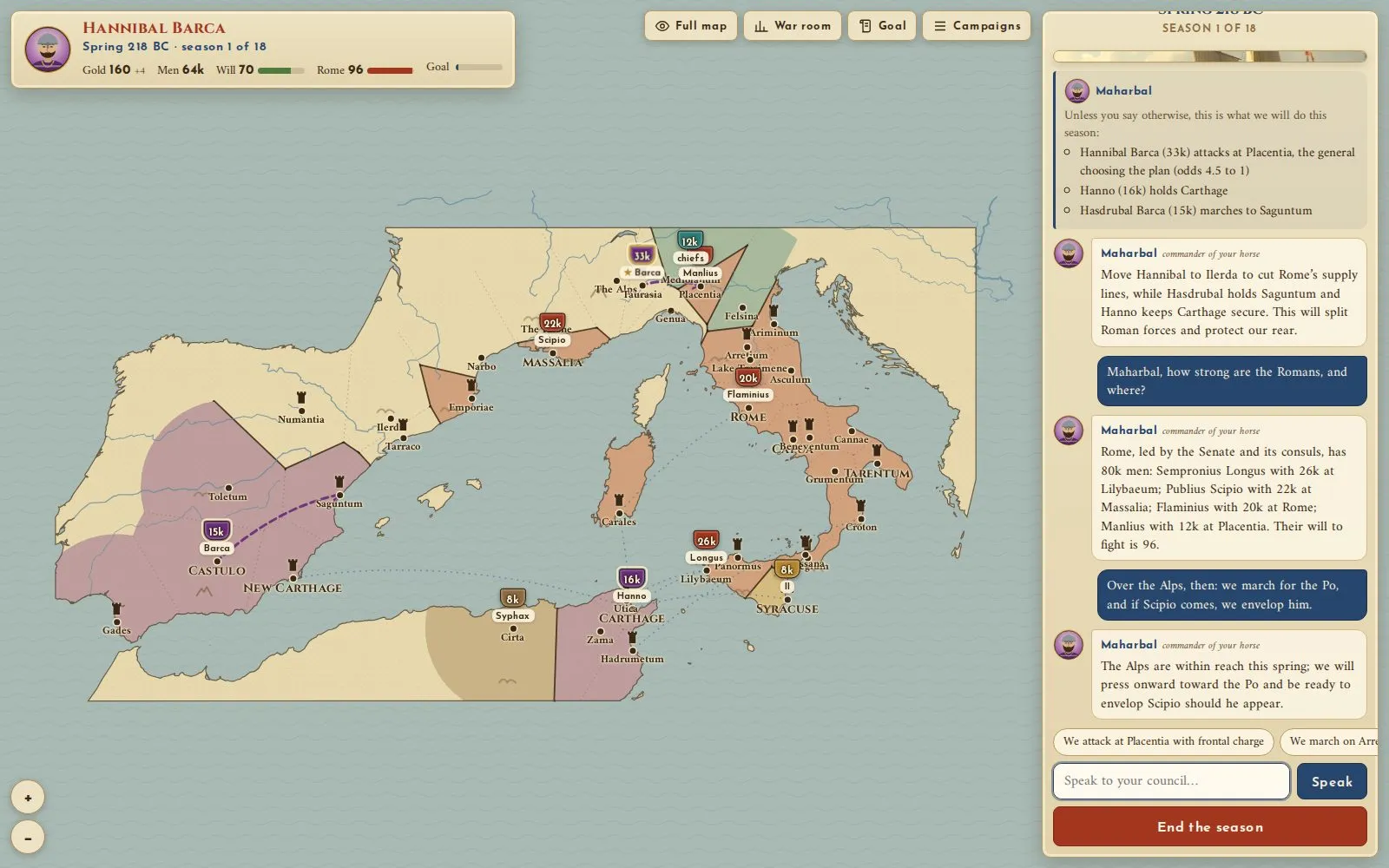
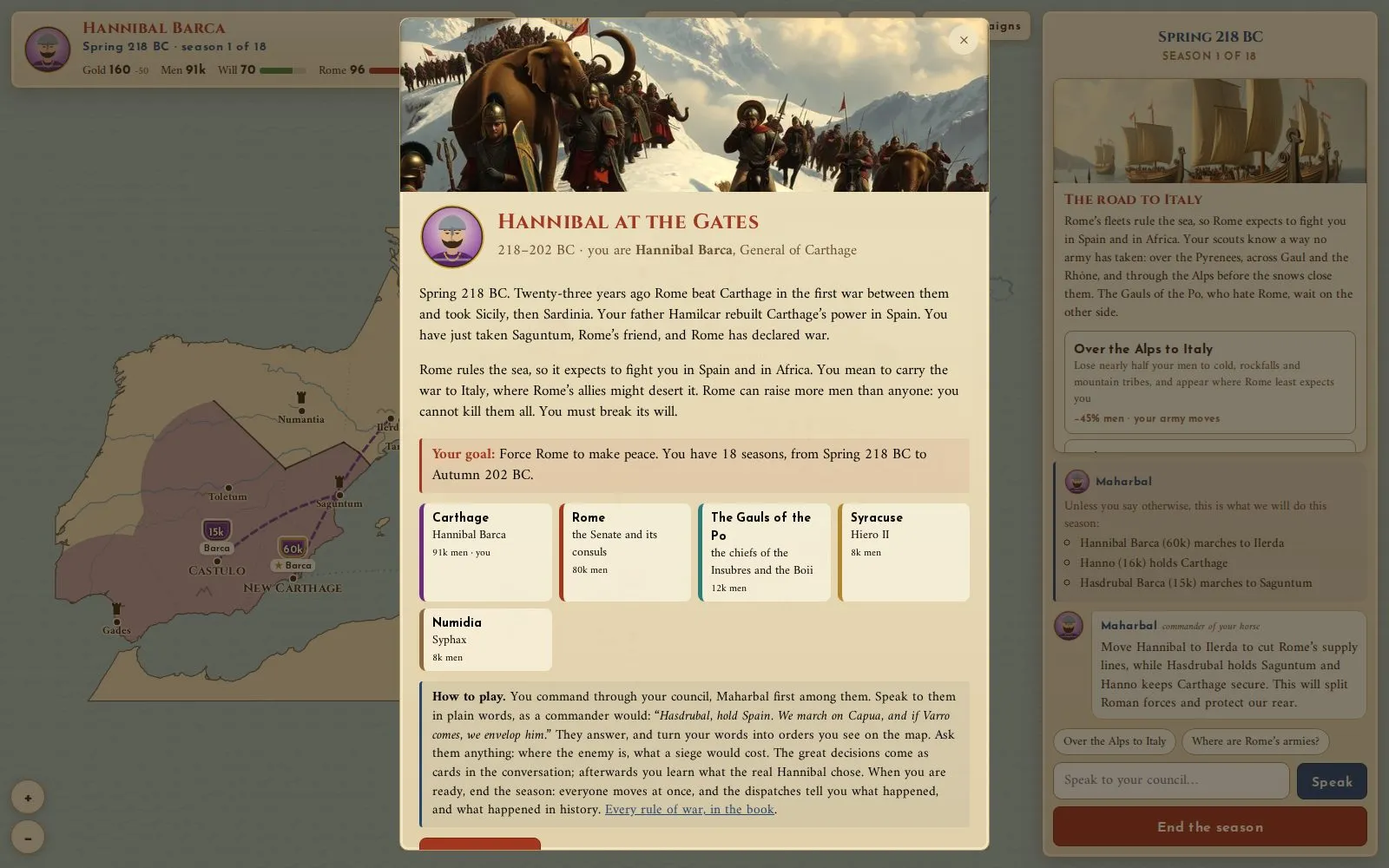
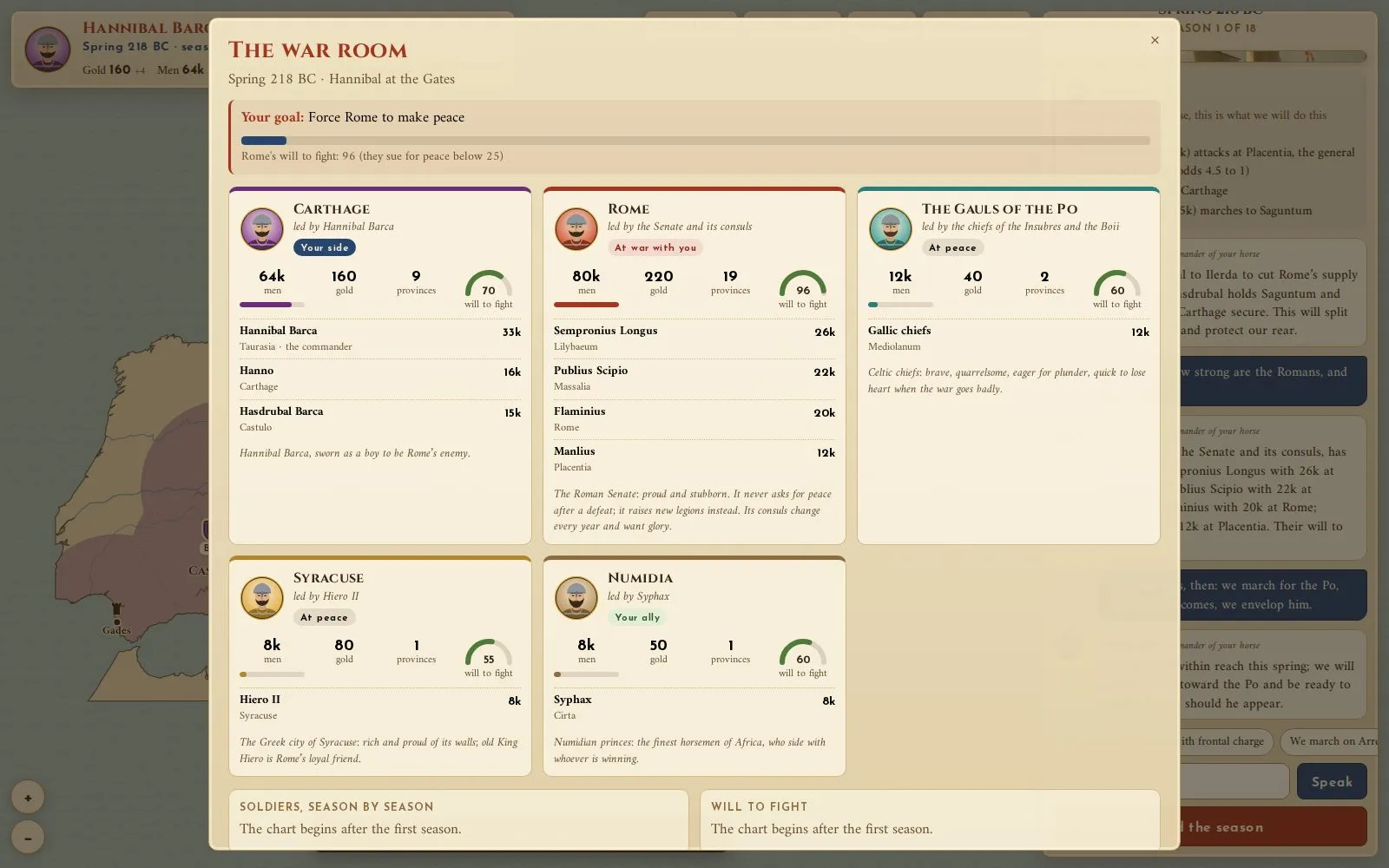
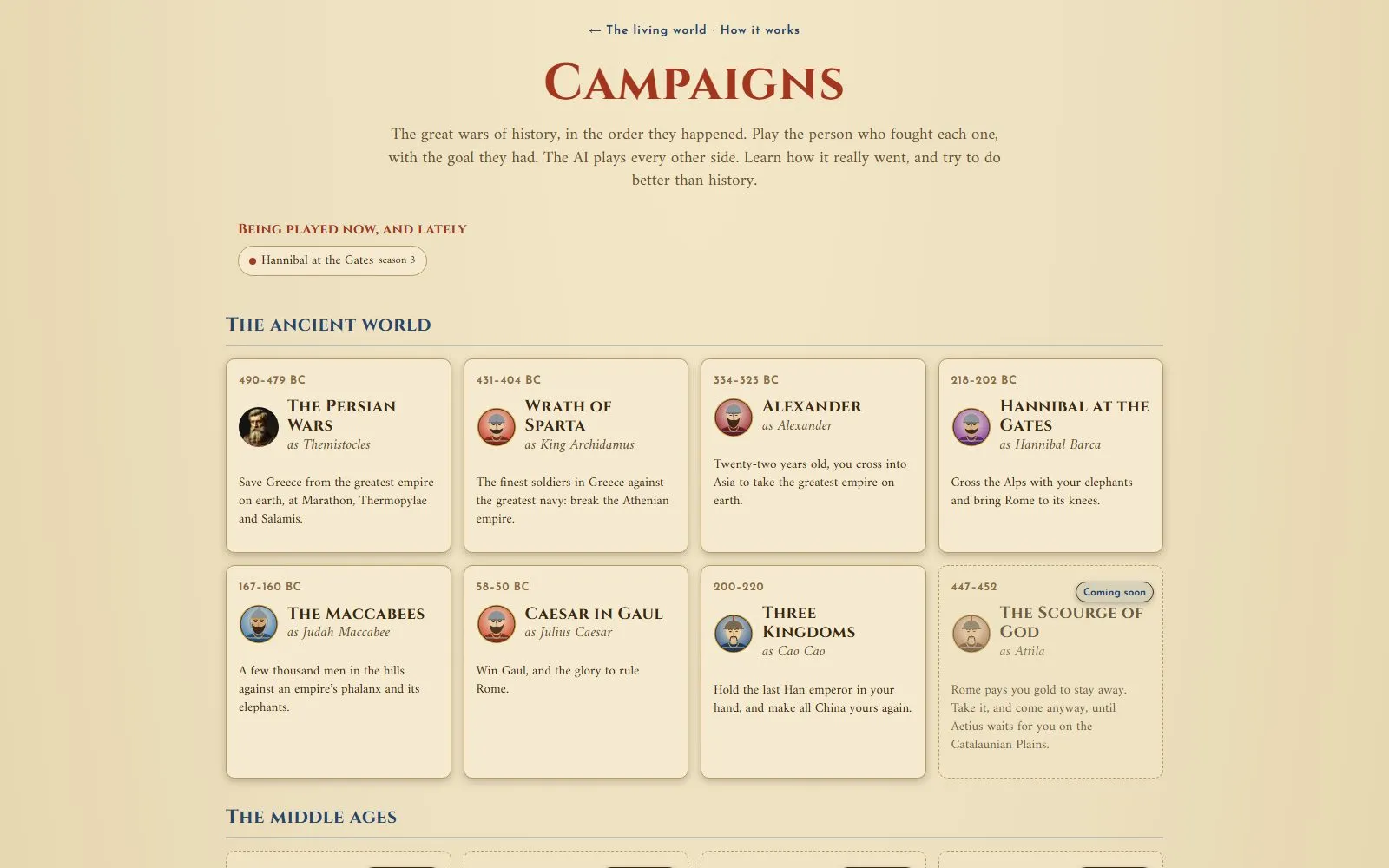
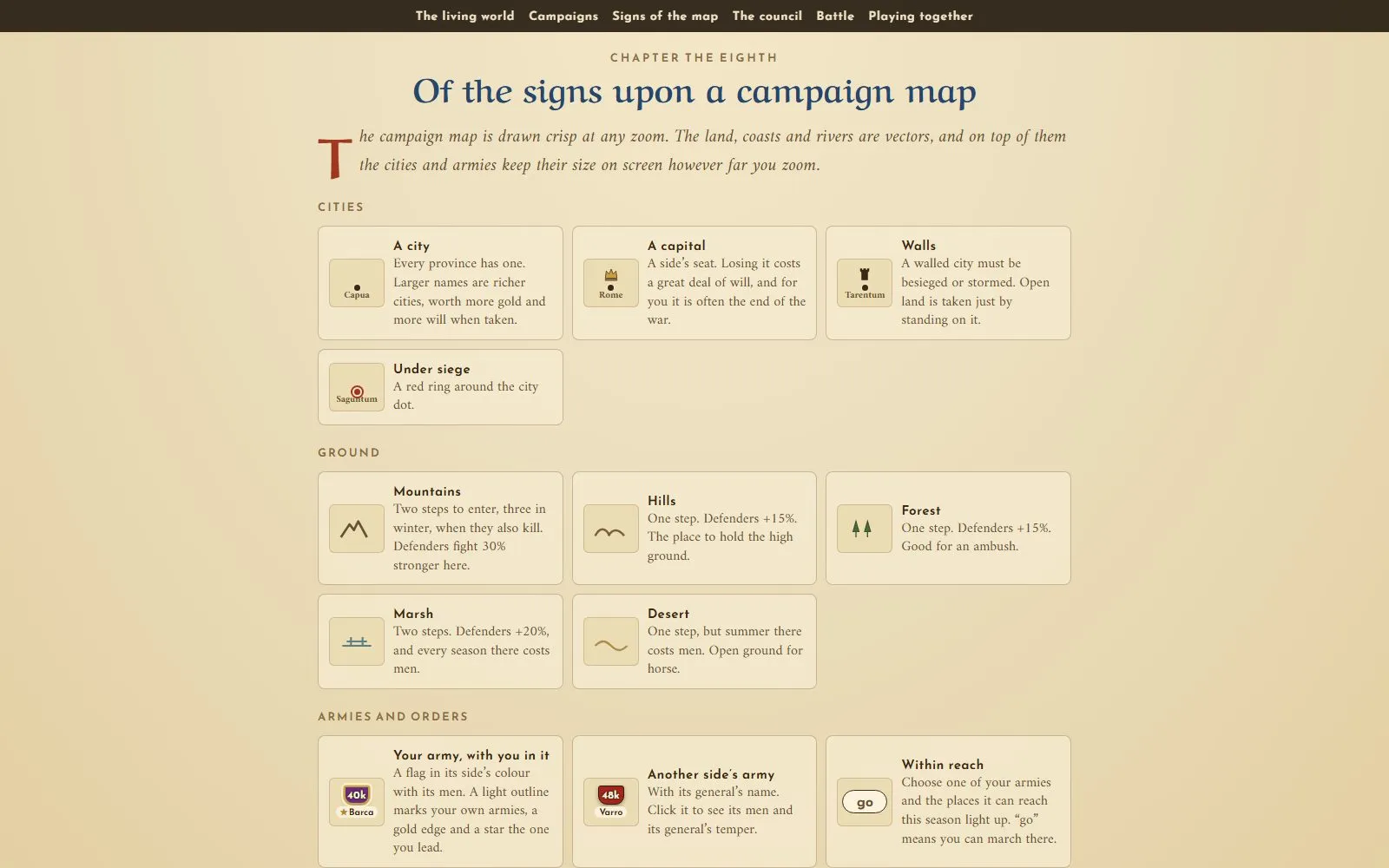
Campaigns are history’s great wars, in the order they were fought. You play the person who fought each one (Themistocles, Alexander, Hannibal, Caesar, Cao Cao), with the goal they really had, on a map of their world. The AI plays every other side. There are no menus of orders. You speak to your council in plain words, “Hasdrubal, hold Spain. We march on Capua, and if Varro comes, we envelop him”, and they answer in character and turn your words into orders on the map. At the end, your war is set beside the real one and judged better than history, as history, or worse. Seven wars are playable now, and eighteen more, up to the Second World War, are on the way.
How it works
- AI that stays inside the rules. The council answers from the war’s own data: who is alive, where every army stands, what the odds are. Your plain orders always stand, the AI only fills in what you left open, and every proposal is checked against the rules before it reaches the map. When the free AI budget runs out, the rules answer instead, so the game never stops.
- One engine, the same everywhere. The same war, start and orders always give the same result, in the browser, on the server and in the tests. The server replays every season before it records it, so replays are exact and no result in the lists can be faked.
- Balanced by simulation. A simulated commander plays every war many times over, so the wars history won are won most of the time, and the wars history lost can be won now and then.
- Live and shareable. Anyone can watch a war being played, season by season. A finished war becomes a replay and a summary written by an AI historian.
- Automations with n8n. A herald workflow announces finished wars and big moments.
- On chain, without the hassle. A finished war can be kept as a scroll, an NFT on Base Sepolia. The game makes a wallet in your browser and pays the fees.
- Pictures true to their time. Old-master portraits and history paintings, made with Workers AI, in place of game art.
What it shows
The council is the same pattern a business needs from an AI assistant: someone says what they want in their own words, the assistant does exactly that, fills the gaps sensibly, and never acts outside the rules or invents facts. It is the difference between a demo and something you can trust with real work.
The first version, a two-kingdom war with Chainlink prices and real weather, is still running as Nobody’s Playing.
Try it on your own business
The same AI drafts a free automation plan: describe your business, or pick a clinic, accounting firm or fintech, and it suggests two or three things I could automate for you.